
Generative AI Training in Nepal
Build real applications with LLMs, prompt engineering, RAG and image generation.
- 3 Months
- Mode: Online, Hybrid & Physical Live Classes
- Beginner to Intermediate
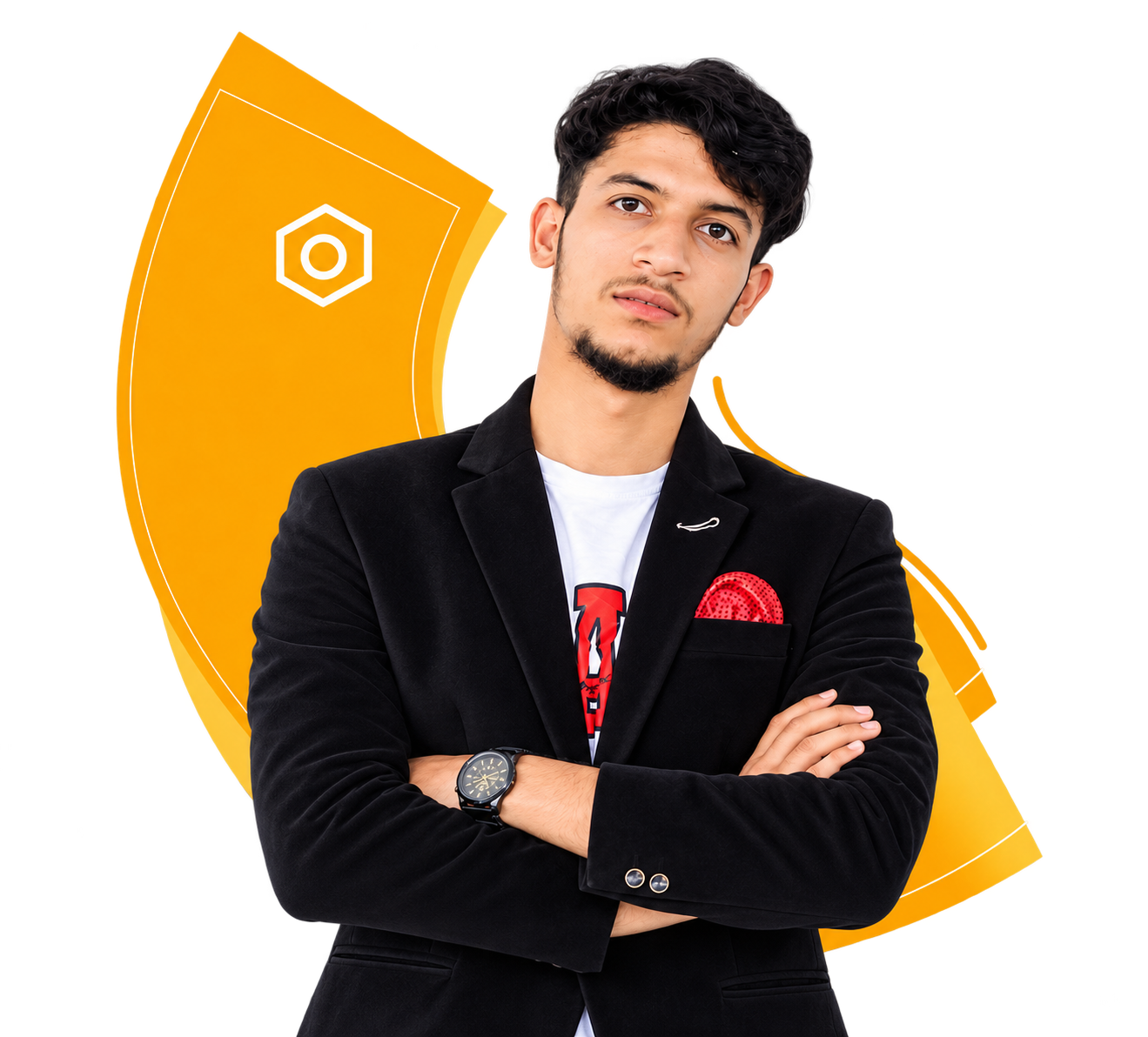
Learn directly from Rohan Aryal
 AI Integrated
Total fee
Rs. 12,000
Start with
Rs. 6,000
Course overview
Generative AI is changing how software, content and businesses work. This program teaches you how modern generative models work and, more importantly, how to build useful products with them.
You will start with deep learning and transformer fundamentals, master prompt engineering, then build chatbots, document assistants and multimodal apps using OpenAI, Claude, Hugging Face and open-source models. You will also learn when and how to fine-tune a model, and how to ship your work with Streamlit and Gradio.
What you will learn
- Understand transformers, attention and how LLMs are trained
- Write reliable prompts using proven prompt engineering patterns
- Build chatbots and document Q&A apps with RAG
- Generate and edit images, speech and multimodal content
- Fine-tune open-source models with LoRA and QLoRA
- Deploy generative AI apps with Streamlit and Gradio
Tools covered
Some of the major industry-relevant tools you will work with in this course:
- Python
- OpenAI API
- Claude API
- Hugging Face
- LangChain
- PyTorch
- Stable Diffusion
- Whisper
- Ollama
- ChromaDB
- Streamlit
- Gradio
Curriculum
The complete syllabus for Generative AI: every lesson, section and topic you will cover. Download it as a PDF to read offline or share it.
8 lessons · 25 sections · 93 topics
- What generative AI is and where it is used
- A short history: from GANs to transformers
- Text, image, audio, video and code generation
- Generative AI in Nepal and global industries
- Bias, fairness and transparency
- Copyright and content ownership
- Privacy and data protection
- Using AI honestly at work and in study
- Python, Jupyter Notebook and Google Colab
- Managing API keys safely
- Git and GitHub basics
- Installing and running open-source models with Ollama
- Data types, loops and functions
- NumPy arrays and vectorised operations
- Pandas DataFrames for loading and cleaning data
- Plotting with Matplotlib
- Neurons, layers and activation functions
- Loss functions and gradient descent
- Training, validation and test sets
- Overfitting and regularisation
- Tensors and automatic differentiation
- Building a model with nn.Module
- Writing a training loop
- Transfer learning with pre-trained models
- Training on free GPUs in Colab
- Tokenisation and embeddings
- Self-attention explained visually
- Encoder, decoder and encoder-decoder models
- Positional information and context length
- GPT, Claude, Gemini, Llama and Mistral
- Open-source vs proprietary models
- Model sizes, speed and cost
- Reading model cards and benchmarks
- The Hugging Face Hub and model cards
- Pipelines for text, vision and audio tasks
- Tokenizers and model loading
- Running models locally vs through APIs
- Zero-shot and few-shot prompting
- Role and system prompts
- Chain-of-thought and step-by-step reasoning
- Controlling tone, length and format
- Getting JSON reliably
- Extracting data from documents
- Classification and tagging tasks
- Validating outputs with Pydantic
- Building a prompt test set
- Comparing prompt versions
- Prompt injection and how to defend against it
- Prompt libraries and templates
- OpenAI and Anthropic Claude SDKs
- Streaming responses
- Token usage, limits and cost control
- Error handling and retries
- Conversation memory
- Personas and guardrails
- Function calling basics
- Project: domain-specific chatbot
- Embeddings and vector databases
- Loading and chunking documents
- Question answering over your own PDFs
- Showing sources and citations
- Building apps with Streamlit
- Quick demos with Gradio
- Sharing apps on Hugging Face Spaces
- How diffusion models work
- Text-to-image with Stable Diffusion
- Image-to-image, inpainting and outpainting
- Prompting for images: style, composition and lighting
- Speech-to-text with Whisper
- Text-to-speech voices
- Transcribing and summarising meetings
- Describing and analysing images with LLMs
- Reading documents, charts and screenshots
- Project: multimodal assistant
- Prompting vs RAG vs fine-tuning
- When fine-tuning is worth it
- Estimating data needs and cost
- Preparing instruction datasets
- LoRA and QLoRA explained
- Fine-tuning an open-source model on Colab
- Evaluating the fine-tuned model
- Quantisation and model size
- Running models locally with Ollama
- Latency and throughput basics
- Choosing a real-world use case
- Defining users, features and success criteria
- Design review with your mentor
- Building the generative AI product
- Testing quality and safety
- Deploying and sharing the app
- Demo video and documentation
- Demo day presentation
- Internship readiness evaluation
What you get
- Live instructor-led classes
- Recorded video of every session
- Hands-on projects and assignments
- 1:1 mentor support and doubt sessions
- Internship pathway after evaluation
- Verifiable completion certificate
- Learner community on Discord
- Career guidance and portfolio review
Fees & payment plan
3 Months program. Choose the class type that suits you. The curriculum, mentors, recordings and certificate are the same in every mode.
Online
Live, interactive classes over video, from anywhere in Nepal or abroad.
Rs. 12,000
Enroll online| Payment plan | Online | Hybrid | Physical |
|---|---|---|---|
First installment (50%) Payable at enrollment | Rs. 6,000 | Rs. 6,000 | Rs. 6,000 |
Second installment (50%) Payable when you are promoted to the internship | Rs. 6,000 | Rs. 6,000 | Rs. 6,000 |
| Total | Rs. 12,000 | Rs. 12,000 | Rs. 12,000 |
Your mentor
Rohan Aryal
Mentor
Rohan mentors Leafclutch Academy's AI and data programs, guiding learners from their first lines of Python to building agents, generative AI applications, machine learning models and analytics dashboards, with a strong focus on hands-on projects.
Who can join
- Basic computer skills
- High-school level mathematics
- Programming experience is helpful but not required
Career opportunities
- Generative AI Engineer
- Prompt Engineer
- LLM Application Developer
- AI Product Developer
Earn a high-value industry certificate
Complete Generative AI and receive a certificate from Leafclutch Academy. Add it to your LinkedIn profile, resume or CV to stand out to recruiters. Every certificate carries a unique code that employers can check online.
Already earned a certificate? Verify it here

Related courses
Learners who viewed Generative AI also showed interest in these courses.


Frequently asked questions
I have never coded before. Can I join?
Yes. The first two modules cover the Python you need. Expect to spend some extra practice time in the first weeks.
Will I learn to use ChatGPT or to build with it?
Both, but the focus is building. You will call models through APIs and create your own applications.
Do I need a powerful computer?
No. Heavy training runs on free cloud GPUs such as Google Colab.
Start Generative AI this month
Talk to our counsellors for free. We will help you choose the right course, mode and batch.